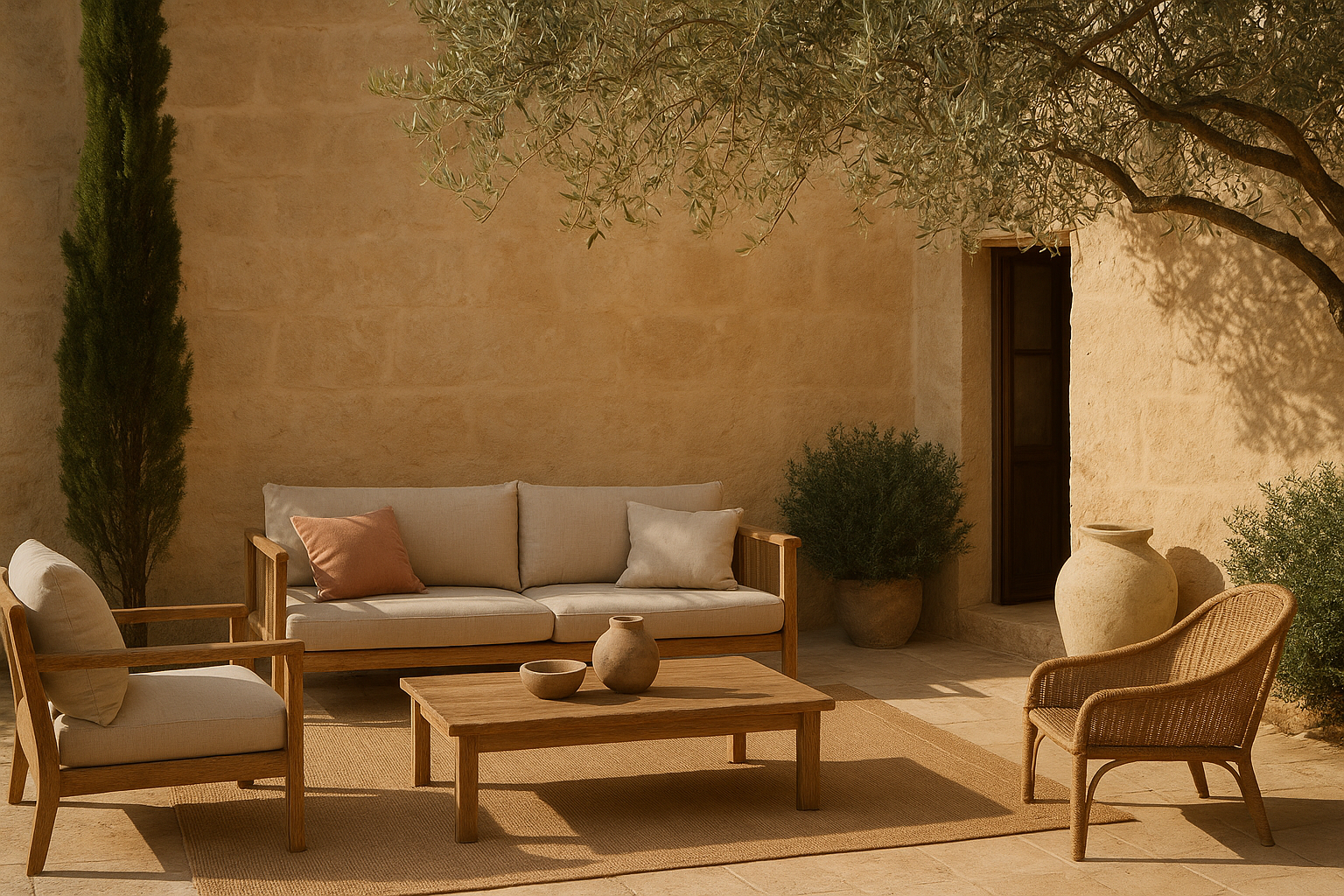
The table arrived before the curtains. The chair belonged to someone else for years, and the bowl came home in a bag carefully wrapped in a spare jumper. A room can begin as a collection of separate arrivals. Living with them is how you discover what belongs together.
For a Mediterranean-inspired home, start with the qualities you enjoy in a particular reference: shaded daylight, a tactile wall or a comfortable relationship with the garden. The region contains many traditions, so choose the details with curiosity and let your own home guide their use.
Begin with the pieces that already have a place in your day
Look at the furniture you use, the view you return to and the things you would miss if they disappeared. These are useful starting points for a palette. A timber grain, a quiet stripe or the glaze on a familiar vessel may suggest the next colour.
Try samples beside those pieces in daylight and after the lamps come on. Leave them for a few days. Choose what you enjoy in this setting rather than expecting a fashionable colour name to produce a particular feeling.
Make room for people before arranging the objects
Place the main seats around the way conversation happens. Check the path to doors, windows and storage with the furniture in use. A dining chair needs room to pull back, and a reading seat needs useful light and somewhere for a book.
In a compact room, try a flexible piece where it solves a real need. A storage bench still needs room for its lid; a folding table needs a place when folded. Our guide to small homes and rentals explores these everyday choices.
Let texture be part of what you touch
Bring a smooth surface beside a woven one or a soft cover against a timber frame. Choose layers you will use and can care for. A fabric that is too delicate for the favourite family seat may be happier as a smaller detail elsewhere.
Leave some space around an object you enjoy. A useful serving bowl can have more presence on a clear table than several decorations arranged around it. Move a familiar piece before buying another to fill a gap.
Carry a few familiar qualities through the rooms
A timber tone or a muted colour can recur in different forms without making every room identical. Keep the kitchen’s working surfaces practical, give the bedroom suitable reading light and plan a place for the objects that otherwise collect in the hallway.
For a child’s room, use adaptable storage and changeable details around a layout suited to the child’s current needs. Refer to our children’s bedroom guide for product guidance and the safety sources that belong alongside the decorating.
Let the outdoors join gradually
Begin with one useful seat or a table at the hour you actually spend outside. Plan shade, clear routes and care before adding another group of furniture. Repeat an indoor colour in an outdoor-suitable textile or pot if you enjoy the connection.
Choose plants for the local climate, exposure and watering routine. A particular leaf shape may evoke a place you love, while a locally suitable alternative may be easier to care for in your own garden. The outdoor zoning guide helps connect the activities.
Keep the room open to another chapter
Use the arrangement long enough to learn from it. Notice where guests settle, which cover you reach for and which table stays clear because it is useful. Keep making the small adjustments those habits suggest.
Eventually the chair, the bowl and the curtains stop feeling like separate decisions. They are simply the things around you while the day happens, with space for the next object that earns its place.