A curtain stirs beside an open door. The table is partly in sunlight, a ceramic bowl holds the fruit and the comfortable chair faces towards the garden. The appeal of this scene comes from the way it can be used. Mediterranean-inspired decorating can begin with those qualities and the conditions of your own home.
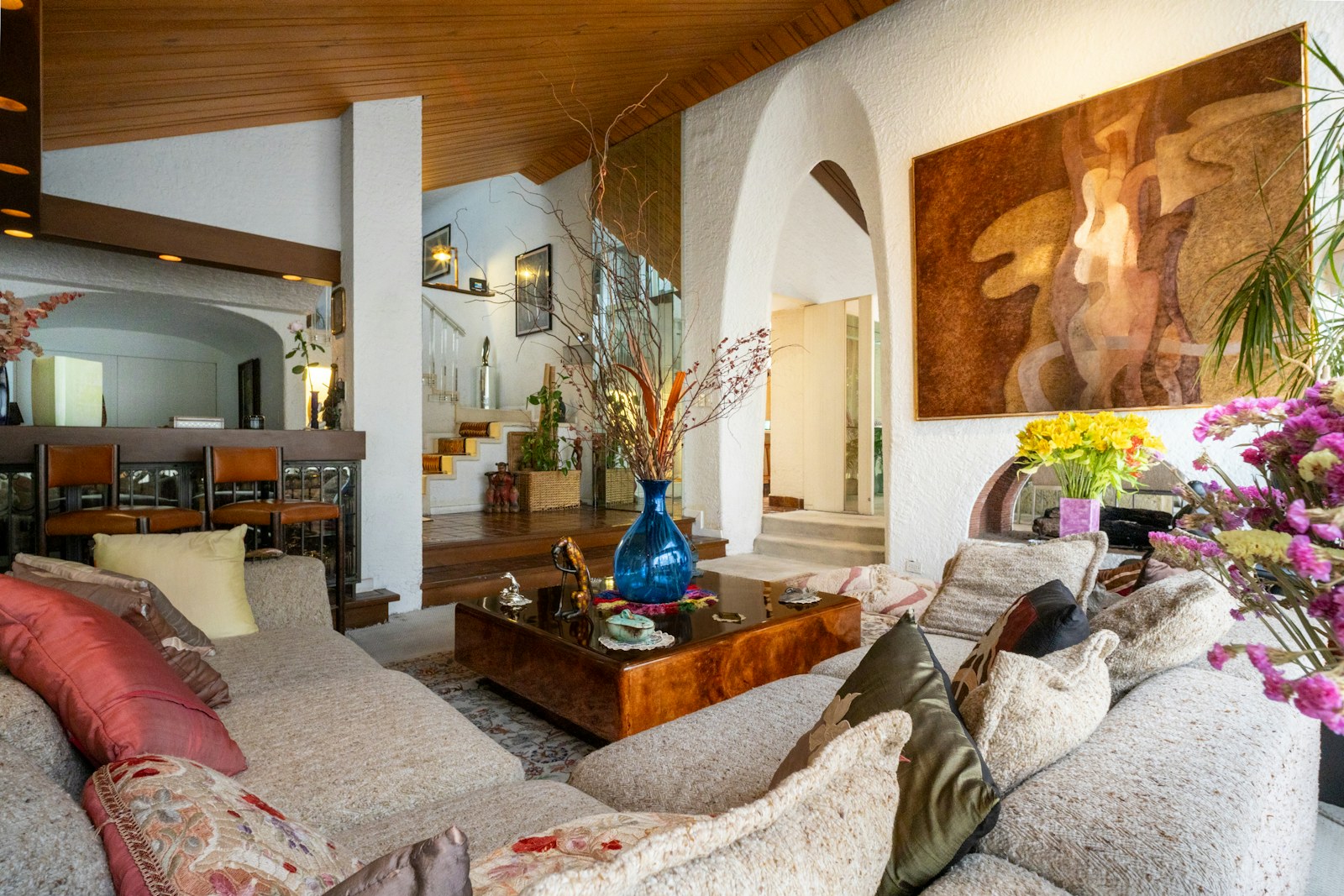
Start with the feeling, then choose the palette
Build a room around the light it actually receives. In a north-facing space, warm whites, oat and pale timber can keep the room from feeling cold. In strong afternoon sun, chalk, limestone and muted clay soften the glare. Test paint and fabric samples at different times of day; colours shift noticeably between morning shade and late sun.
Keep the base restrained and add colour in pieces that are simple to change: a blue cushion, an olive-green lamp or a rust-coloured throw. Repeat one accent in two or three places so it feels intentional. Avoid turning every surface into a theme; an empty patch of wall or tabletop is part of the composition.
Layer materials with different textures
Pair smooth with tactile: linen beside timber, a woven lampshade above a ceramic table lamp, or a hand-finished bowl on a clean-lined console. Natural fibres add depth, but they do not all need to appear in the same room. One generous woven texture can do more than several competing baskets, rugs and cane pieces.
Choose materials for their real maintenance needs. Linen creases; unfinished wood marks; woven surfaces collect dust. If a room is busy, use robust finishes where hands and spills are common, then reserve delicate pieces for shelves or occasional seating. For outdoor furniture, compare upkeep and weather exposure in our guide to outdoor furniture materials.
Let daylight connect rooms and garden
Keep window areas visually open where privacy allows. Lightweight curtains soften strong light without making a room feel sealed off, while mirrors placed perpendicular to a window can spread daylight into a darker corner. At night, combine general light with a reading lamp and a lower accent source rather than relying on one bright ceiling fitting.
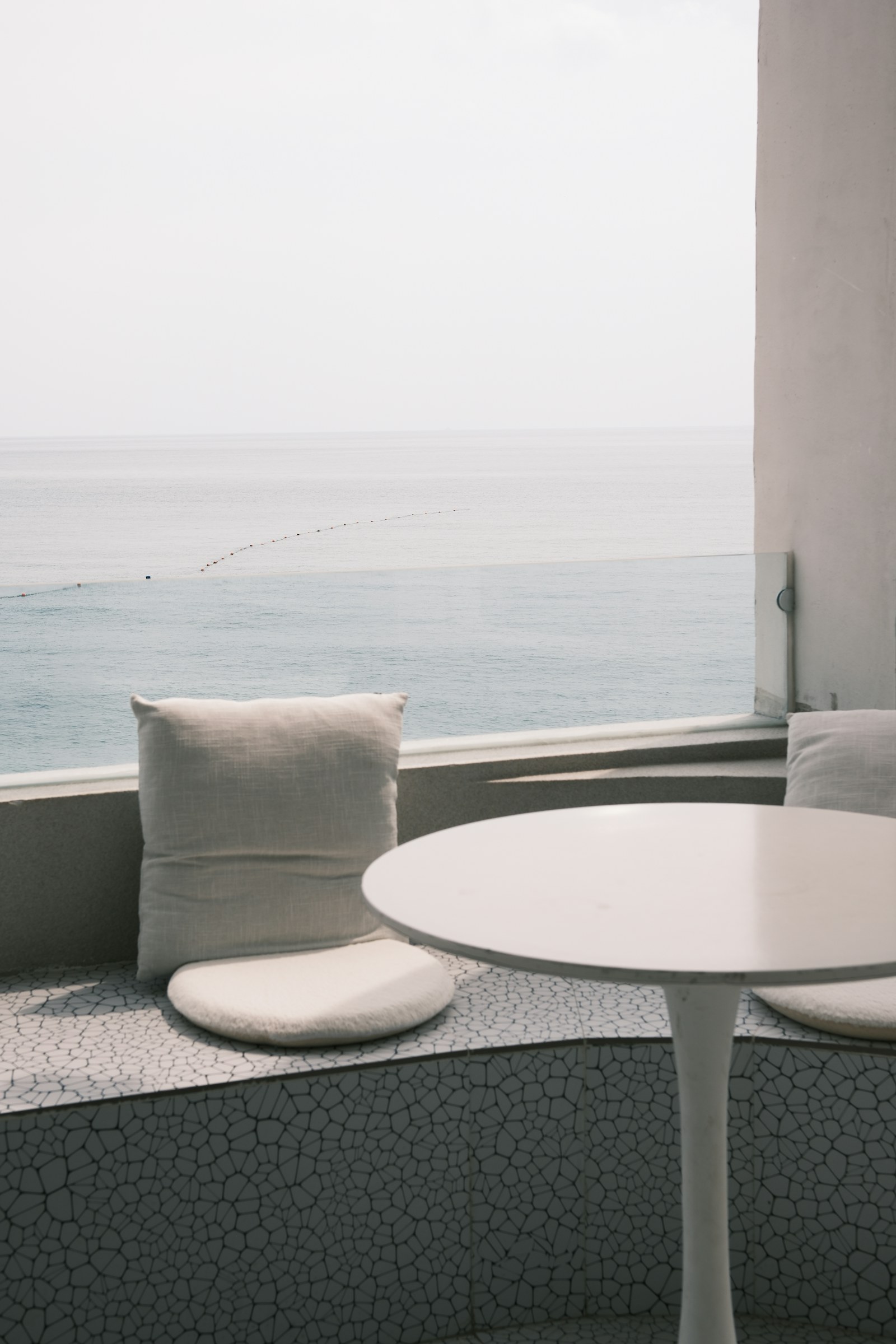
When a living room opens onto a balcony or terrace, repeat one material or colour on both sides of the threshold. A timber tone, a muted blue cushion or a pair of terracotta planters can make the two areas read as one sequence. The balcony photo below shows how a modest table and chair can frame the view without filling the floor.
Make the layout work before adding decoration
Keep the route between doors, seating and storage clear. A useful starting point is to place the largest piece first, then check whether people can pass without turning sideways or moving a chair. In a small room, choose furniture with visible legs or a lighter outline and give each object a job. In a larger home, group seating around conversation rather than spreading it evenly along every wall.
Use corners only when they solve a real need: a reading chair with a nearby lamp, a slim desk, or a closed cabinet that hides household clutter. Leave enough space around shelves for a few meaningful objects instead of filling every opening.
Keep the look personal, not staged
Handmade ceramics, books, travel finds and family pieces give a room character. Mix them with simpler forms so the collection has room to breathe. A good edit is more valuable than another accessory: remove one item that blocks a sightline, tidy a surface that has become storage and notice where the afternoon light falls.
The same principles work outdoors. Define dining and lounging areas by how you use them, then plan shade for the hottest hours; our patio shade guide compares flexible options. For a smaller footprint, see practical small-patio ideas.
A simple room-by-room starting point
- Living room: one comfortable conversation group, layered lamps and a natural focal texture.
- Bedroom: soft bedding, useful bedside light and storage that keeps the floor clear.
- Dining area: a table sized for everyday movement, with a pendant that gives the zone definition.
- Balcony or terrace: compact seating, a safe clear path and plants suited to the actual sun and wind.
There is no single Mediterranean formula. Start with the daylight, climate and routines of your home; choose a few materials you enjoy living with; then stop before the room feels over-arranged. That balance is what makes the style feel relaxed rather than imitated.
Begin with one familiar moment: breakfast in the light, reading after work or dinner outside. Make that place comfortable, then let the materials and colours develop around it.