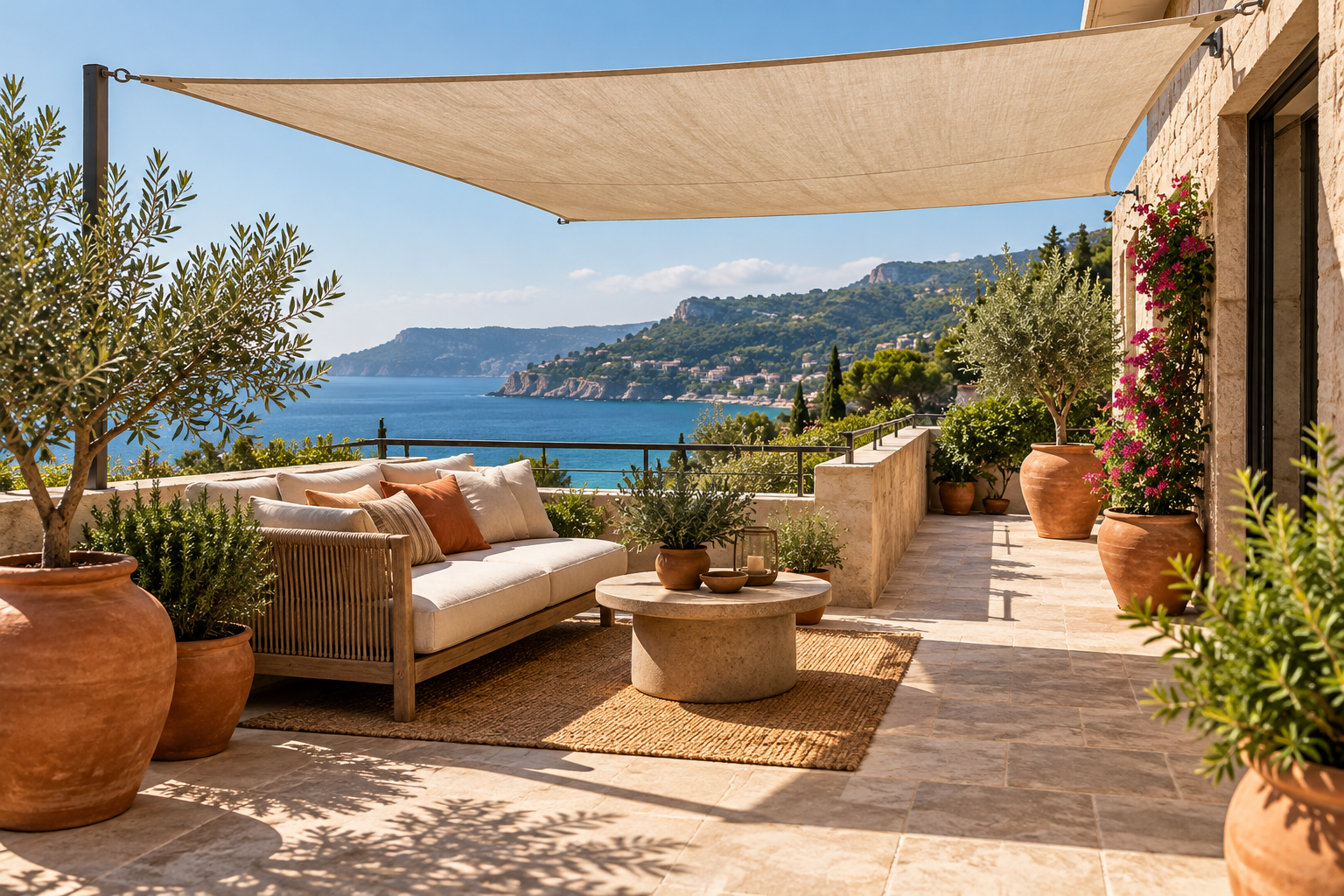
At noon the umbrella shades the table beautifully. By the time you sit down after work, its shadow has moved onto an empty patch of paving and the chair is back in the sun. On a small terrace, follow the shadow and the people before choosing the canopy.
Draw the terrace before choosing shade
Sketch the door swing, railings, planters and seating at their real sizes. Then mark the space needed to pull out a chair and move between the door and the far end. A parasol may have a small pole but a surprisingly wide base; a cantilever model leaves the table clear but usually needs an even larger base beside it. Include the full open canopy and any rotation path on the sketch.
Take a photograph of the terrace in the morning, at lunchtime and when you actually use it in the evening. The shadow moves. A west-facing seat may need side protection from low sun, while a lunchtime dining table may need overhead cover. If you have not measured the space yet, start with our outdoor measurement guide.
Choose the smallest useful footprint
A table with a central parasol opening can be efficient when the table itself supports the layout. Check the manufacturer’s required base and keep the canopy clear of doors and neighbouring property. A tilting head may help with changing light, but it still needs enough room to tilt safely.
A cantilever umbrella may suit a lounge arrangement where a central pole would interrupt conversation. On a narrow terrace, however, the mast and weighted base can occupy the only circulation strip. Mark their footprint with tape before ordering. A freestanding screen or movable planter can sometimes tame low afternoon glare without covering the whole terrace, provided it is suitable for the exposed position.
Treat fixing and wind as separate decisions
A sail or wall-mounted awning can free floor space, but its fixings change the project. Do not attach fabric to a railing, fence or decorative post simply because it looks solid. Wind loads, the supporting structure, local rules and permission from a landlord or building manager all need checking. Ask the supplier or a qualified installer to assess the anchors and follow the product’s operating limits. Close or remove shade when the instructions require it.
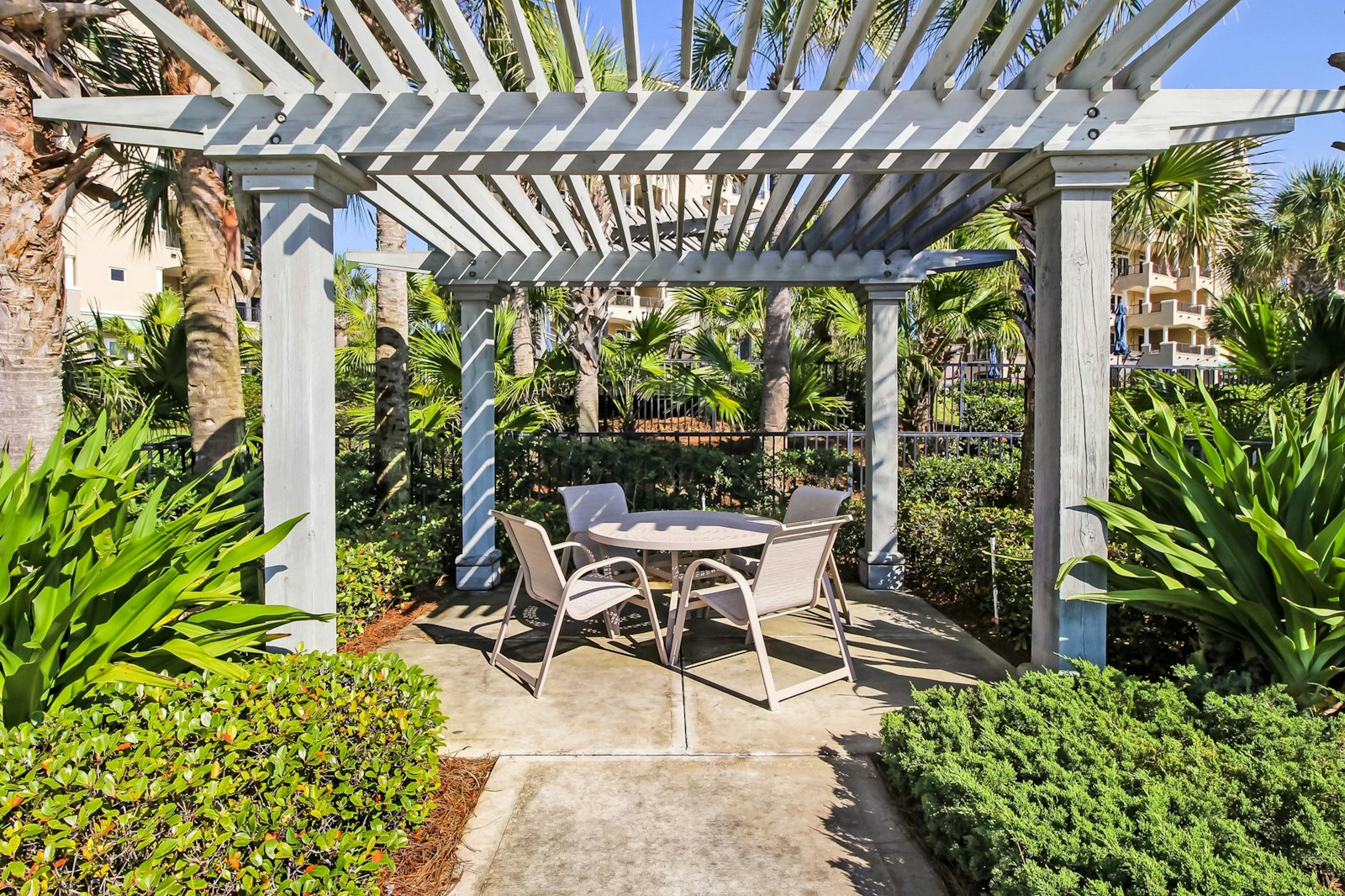
A slim pergola is rarely the first move for a rented or tiny terrace. Even a light-looking frame needs space for posts or suitable structural fixing, drainage and weather management. If you are comparing all the non-roof options, our broader patio shade guide explains the trade-offs in more detail.
Keep one patch of light
Full cover can make a small outdoor room feel enclosed. Shade the seat used most often, then leave a brighter edge for plants or a morning chair. Choose one main shade device rather than layering an umbrella, sail and tall screen into the same sightline. Materials with a quiet colour and simple outline let the furniture remain the focus.
After the shade position is clear, arrange seating around the usable patch of floor. Our guide to layering an outdoor lounge can help you keep the table, chairs and circulation in balance. Before buying, check the base dimensions, the open and closed positions, the storage location and the maker’s weather guidance. The best solution is the one you can use and put away without turning the terrace into an obstacle course.
For a broader look at how an outdoor room connects to the house, read our Mediterranean indoor-outdoor decorating guide.
Try the seat once more at your usual hour outside. Leave room for the cup, the door and the person carrying dinner. Good shade makes that small scene easier to enjoy.