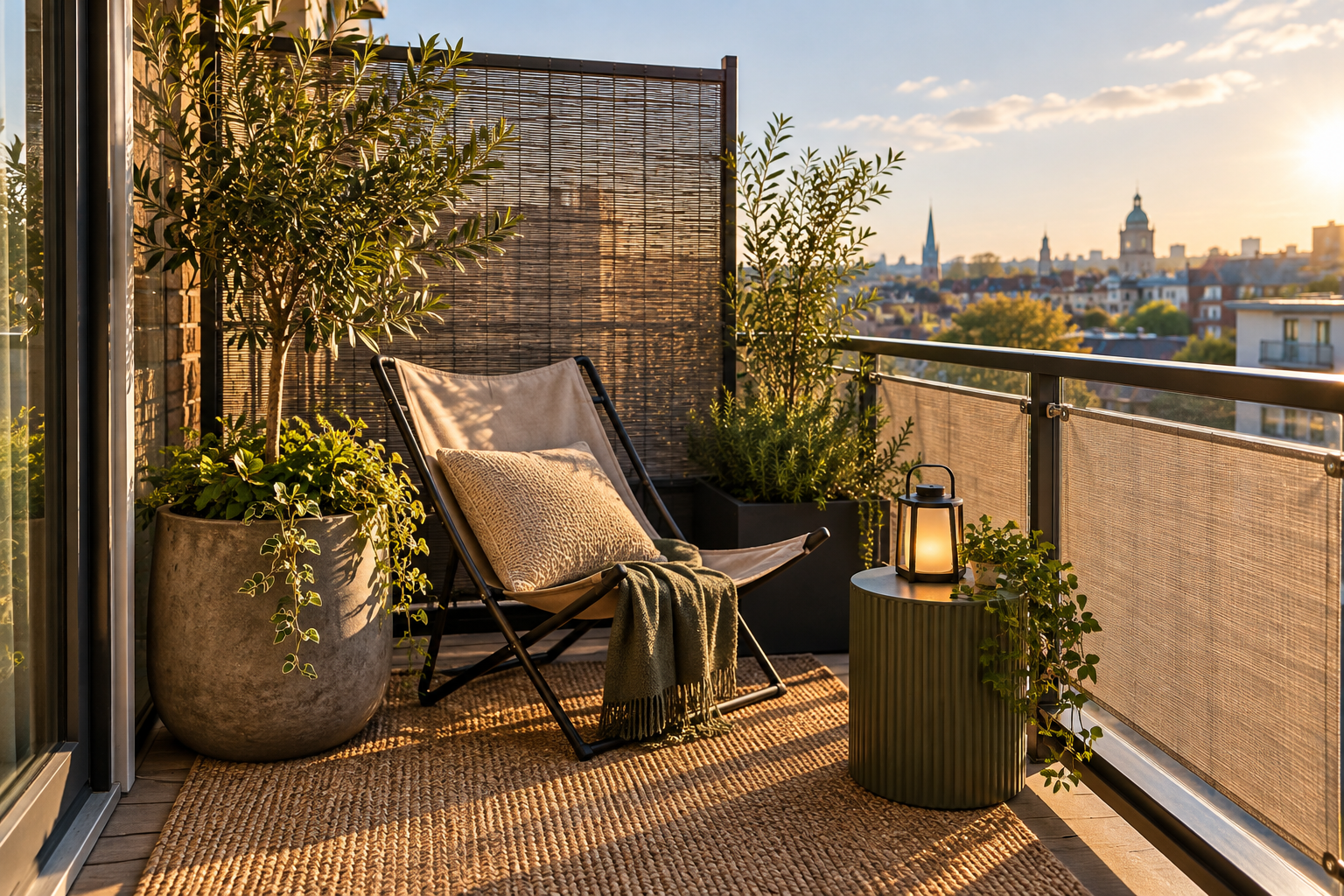
You bring a chair outside, open a book and discover that the neighbour’s kitchen window is directly in view. Privacy suddenly feels like a very specific design problem. It begins at the height of your seat.
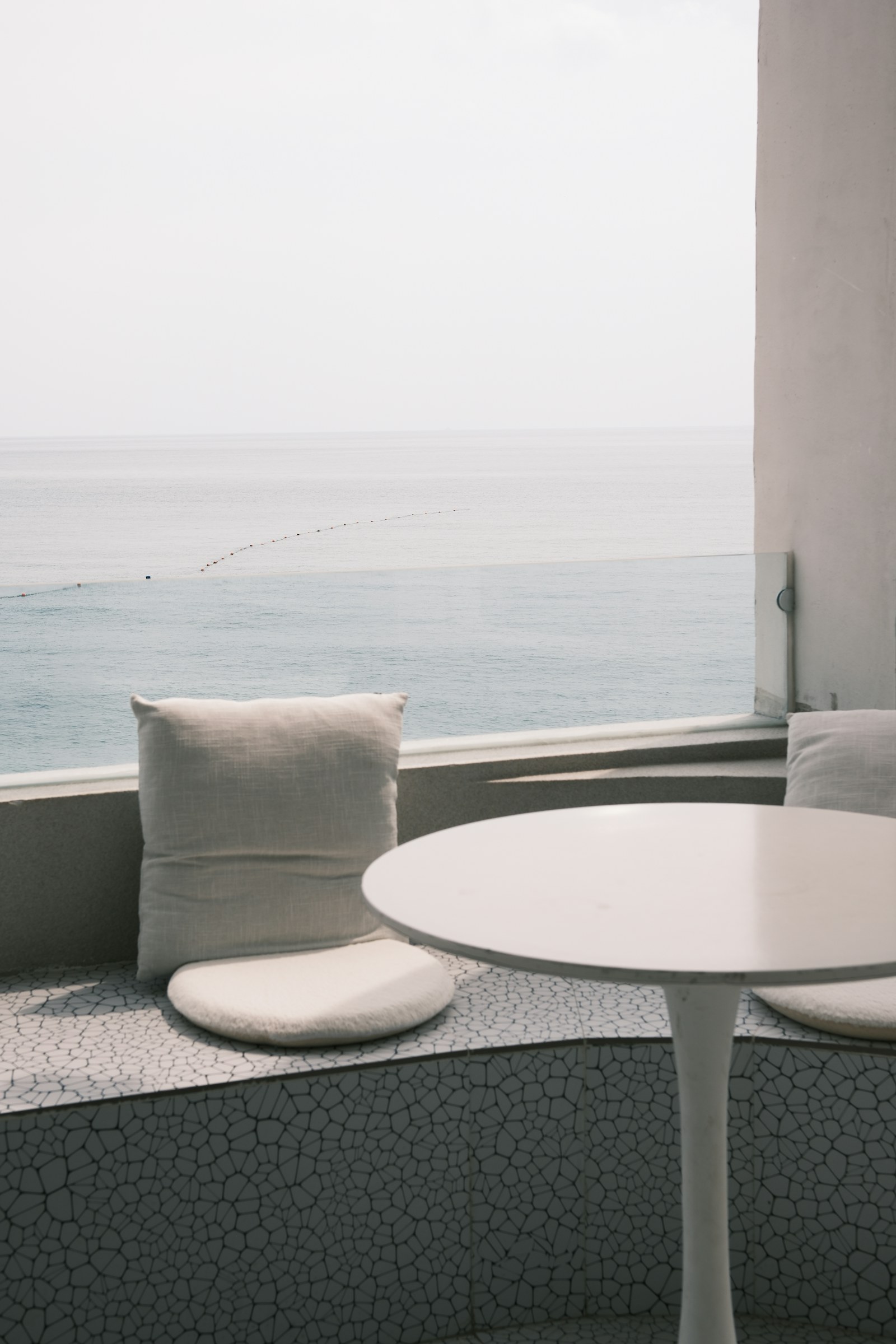
Look from the place you will sit
Sit down and note the particular window, walkway or balcony that feels exposed. Try turning the chair or moving it slightly before adding anything. Check the view from inside as well, so a solution outside does not remove the daylight you enjoy indoors.
Think about the evening too. Different lighting can reveal more than a daytime test suggests. The amount of privacy you want may vary with the time you use the space.
Screen the relevant part of the view
Check building and landlord rules before attaching a screen or trellis. Choose a product designed for the position and follow its installation and wind guidance. A freestanding item also needs a stable arrangement suited to the exposure.
Keep the door, ventilation openings, railing and drainage useful. Avoid loose fabric and improvised panels that can catch the wind. A decorative screen is not a safety barrier.
Try planting at a manageable scale
A plant close to the seat may soften the sightline without surrounding the whole balcony. Choose it for the real light, wind and care available. Allow room for growth and access to water.
Check container weight and balcony restrictions, and secure items appropriately so they cannot fall. Keep planters away from the escape route and follow applicable guidance around children and climbable objects.
Return to the chair
Put a small table within reach and test the arrangement with the door open. Keep enough clear space to move and maintain the planting. The privacy should make the seat more comfortable while the balcony stays practical.
Our small balcony ideas develop the furniture arrangement; the compact shade guide can help with sun at the same seat.