Yesterday the floor was a railway. Today it is the beginning of a cardboard city, and the bedtime book has a new favourite page. A child’s room needs space for those changes, with dependable furniture around the edges and details that can follow the next adventure.
Begin by watching how the room is used. Keep the route from the door to the bed clear, place everyday clothes where the child can reach them, and leave one open floor area for play. If the room is shared, define each child’s storage and create a shared zone that does not block the walking path.
Choose a layout that can change
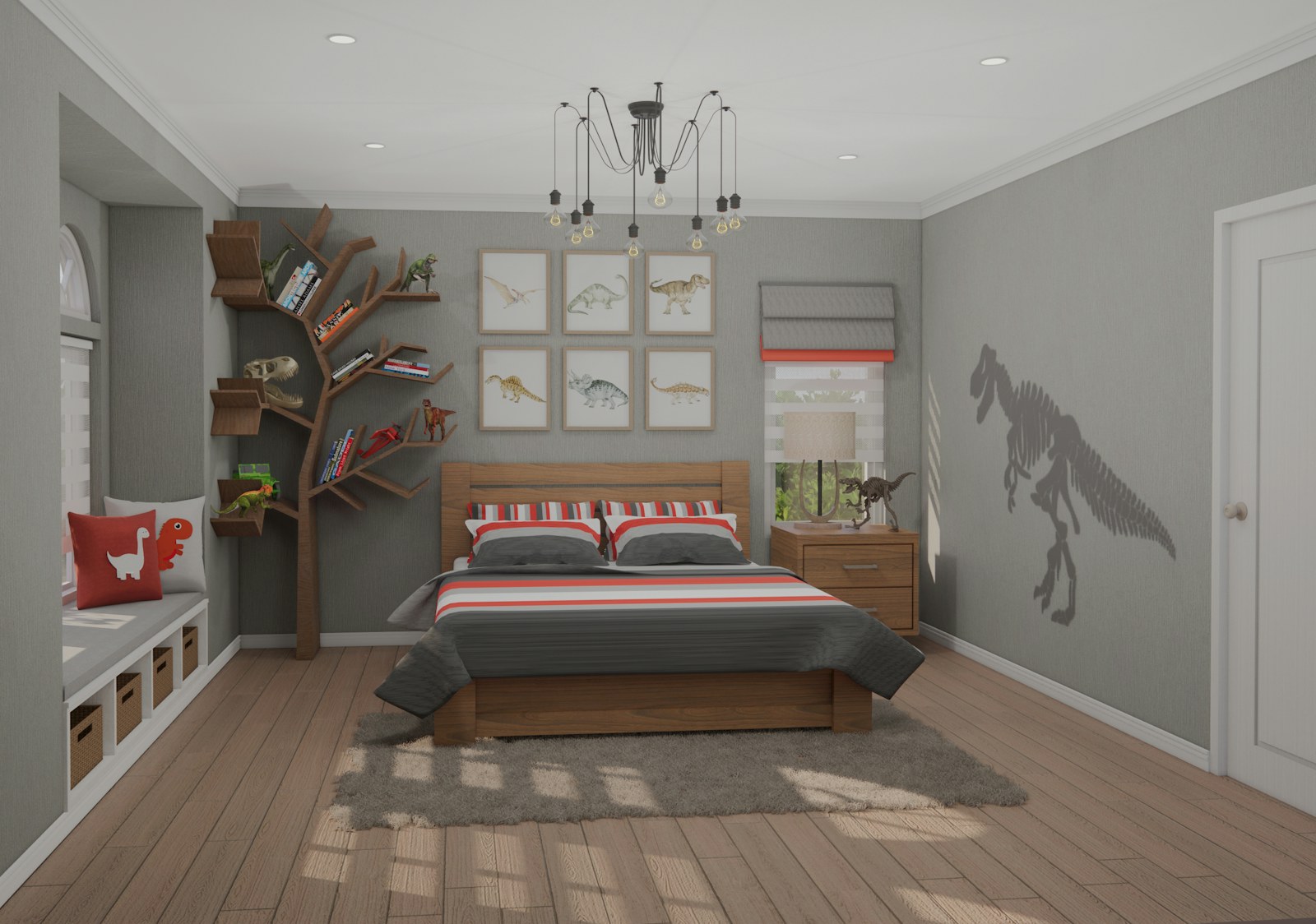
Place the bed where it does not obstruct a door, wardrobe or window. Keep a generous central area free where possible; play space is easier to adapt than a fixed built-in feature. A compact desk can begin as a drawing surface and later support homework. Before buying furniture, measure the room and mark door swings, drawers and the space needed to use them.
For younger children, low open shelves make a small selection of books and toys visible. Use baskets for items that need a quick tidy, and rotate some toys into storage instead of filling every shelf. As interests change, the same shelving can hold books, collections or school supplies.
Use durable finishes and washable layers
Keep permanent finishes simple and choose paint that can be touched up. Bring in personality with a rug, removable artwork, colourful bedding or a display ledge. Select textiles that are easy to wash and check care labels before buying. A washable cover or a spare set of bedding is often more useful than delicate decorative layers.
Let one accent colour repeat in a few places, then keep the rest of the palette calm. Natural wood, warm white and muted green or blue can sit comfortably together without making the room feel tied to a short-lived theme.
Make reading and play easy to start
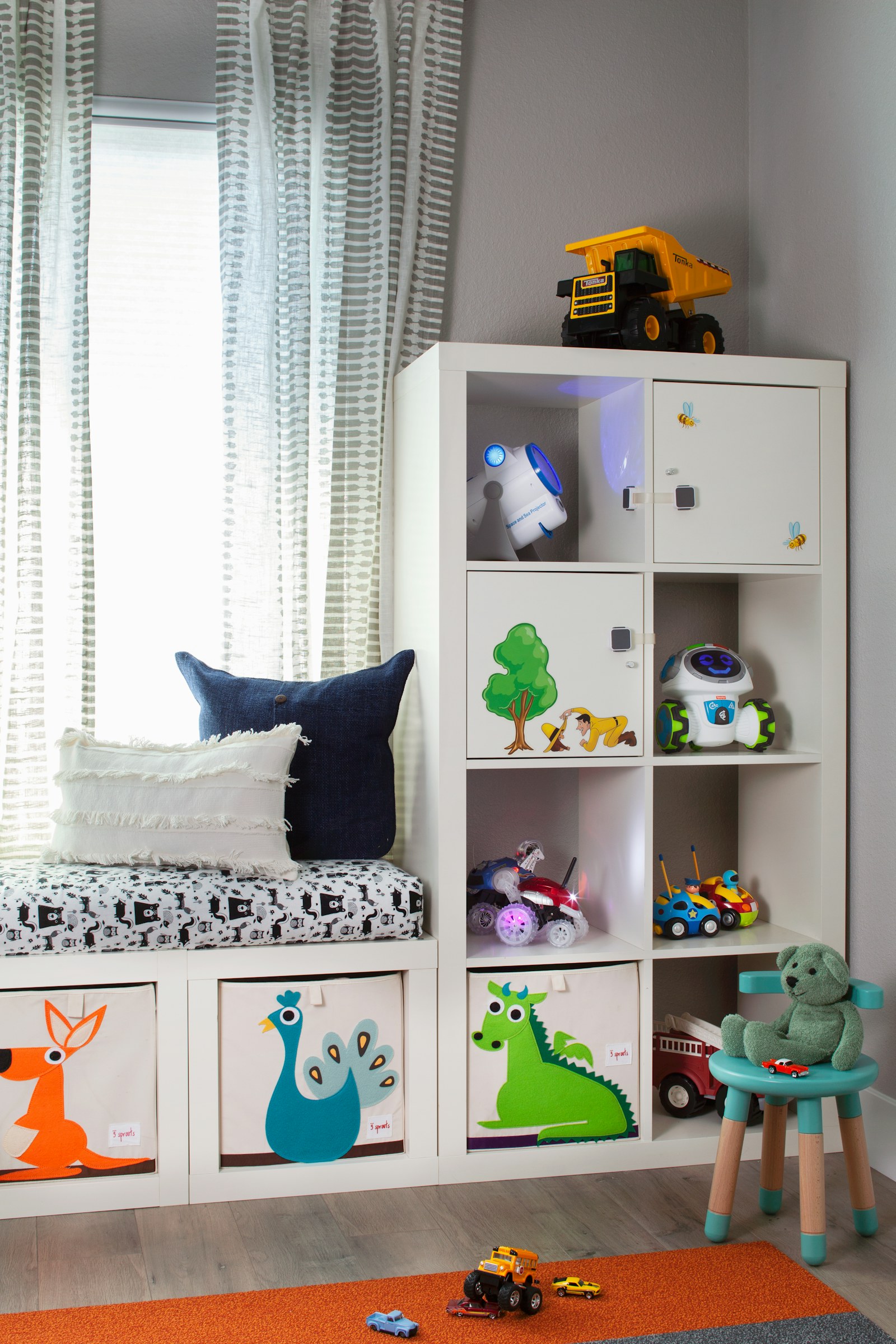
Put favourite books within reach and add a comfortable seat or floor cushion if there is room. A small lamp can make a reading corner feel distinct, but keep cords secured and away from beds and play routes. Give toys a clear home close to where they are used; a simple picture label can help younger children put things back.
When the room needs a study area, position a desk near natural light while avoiding direct glare on a screen or work surface. Keep the desktop small and uncluttered, with a lamp and storage for current supplies rather than every craft material.
Put safety ahead of decoration
Follow the furniture maker’s instructions to anchor tall or top-heavy furniture to the wall, and keep tempting climbable objects off its top. The U.S. Consumer Product Safety Commission advises anchoring furniture and TVs to reduce tip-over injuries. Keep beds and play furniture away from window covering cords; the CPSC recommends cordless window coverings where young children are present. For an infant’s sleep space, use current safe-sleep guidance: the American Academy of Pediatrics recommends a firm, flat sleep surface and keeping soft objects and loose bedding out of the sleep area.
These are general reminders, not a substitute for product instructions or advice from your child’s health professional. See the CPSC home childproofing guide, CPSC furniture anchoring guidance and AAP safe-sleep guidance.
Let the room grow without a full redesign
Choose a bed and storage that suit the child’s current size and can be used for several years, checking manufacturer age and weight guidance. Keep favourite interests in replaceable accessories rather than permanent fittings. Our room-by-room Mediterranean home guide offers more ideas for balancing light, texture and flexible family spaces.
Before finishing, ask whether the child can reach everyday belongings, whether the floor route is clear and whether the room can be reset in a few minutes. A bedroom that supports daily routines will stay useful longer than one designed only for a photograph.
At bedtime, notice whether the books are easy to reach and the floor can be cleared without a major operation. In a few years the cardboard city may become a school project, while the same practical room keeps making space for it.