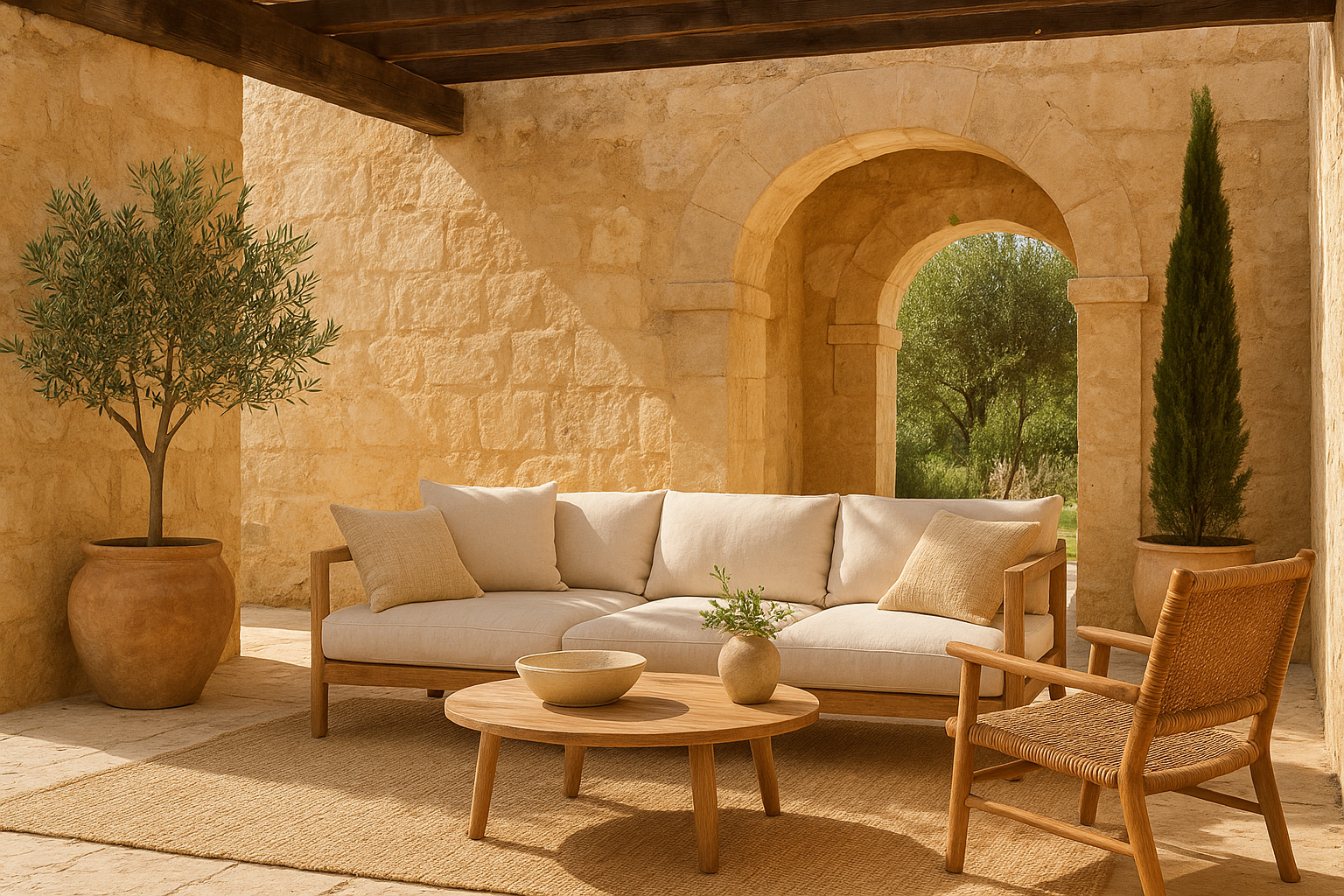
At breakfast, the best part of the room is the end of the table near the window. By afternoon, a shaded corner has become the place to read. After sunset, a small lamp brings people back together. The same home offers several different settings before the day is finished.
Use those changes as a decorating plan. Mediterranean-inspired references can suggest a quiet palette and tactile surfaces, while the light and routines of your own house decide where they belong.
Morning: leave a place for the day to begin
Start at the breakfast table or kitchen counter. Keep the surface useful, with somewhere to set down food and the things that accompany you. Check the route between kitchen and seats when chairs are occupied.
Notice the daylight from your usual position. Test a curtain or blind for the actual glare and privacy needs of the window. Keep controls accessible and follow appropriate installation guidance.
Late morning: give the working room a way to change
If the living room also holds a desk, plan where the current papers and equipment go when work ends. A storage piece should be easy to reach and leave room for its doors or drawers.
Measure the furniture in use. A folding desk needs a clear open position and a convenient closed one. Keep lighting suited to the task and cords out of the route people take through the room.
Afternoon: make a comfortable pause
Try the reading seat at the hour you usually settle there. Check the page for glare and give your arm and cup somewhere to rest. Turn the chair if a small change makes the view and light more comfortable.
Bring texture through a cover or cushion that earns its place in use. Compare colours with existing timber, stone or flooring and view samples again in the evening. The textile guide explores how pattern, touch and care can work together.
Outdoors: follow the hours you can enjoy
Watch the sun and wind where the balcony or terrace meets the house. Choose the seat and shade around the moment you intend to spend there. Check the product guidance, permissions and installation requirements of shade equipment before choosing its final position.
Use outdoor-suitable materials and choose plants for the local conditions and care available. Keep thresholds, drainage and walking routes clear. A colour repeated on both sides of the opening can connect the view without asking indoor furnishings to survive outdoors.
Evening: let the table welcome people
Put useful light near the dining area and enough light on the route between the table and the house. Test the effect from a seated position. Outdoor equipment needs to suit its exact location, with fixed electrical work handled by a qualified professional.
Keep the table setting simple enough to use: room for dishes, comfortable conversation and a place for the serving bowl. A favourite cloth or ceramic piece can make the occasion feel familiar without competing with the meal.
Bedtime: make tomorrow easier
Clear the things that have travelled through the rooms and give them a practical home. Keep adult bedside light within reach and the floor route clear. For children’s spaces, use the bedroom guide and its safety sources rather than copying decorative details from an adult room.
Look back at the place where the day began. Perhaps the curtains need a little adjustment or the breakfast chair would work better on the other side. Make that small change, then let tomorrow show you what belongs next.