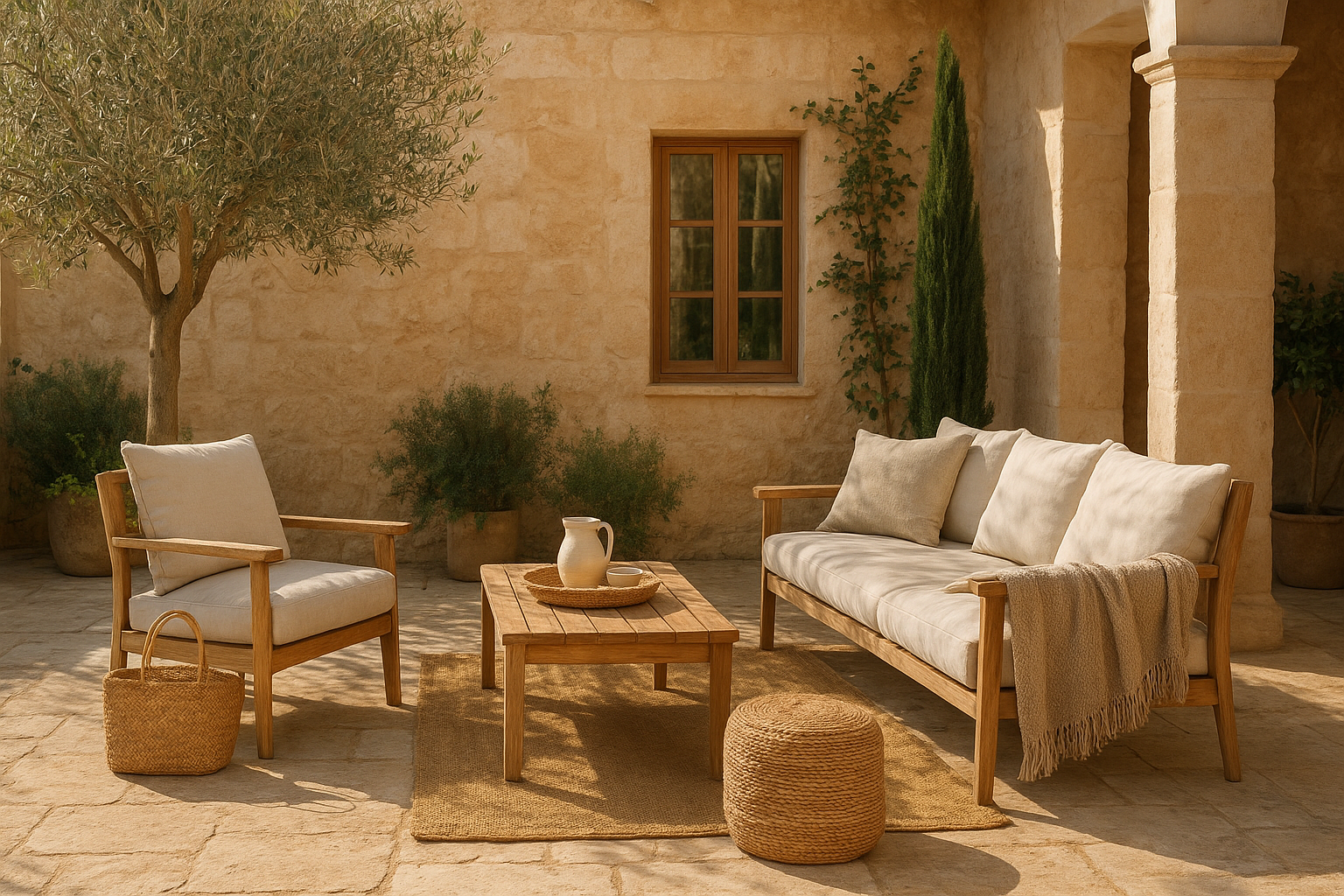
Three samples lie on the table: a warm stone colour, an olive fabric and a small piece of glazed clay. Separately, each is appealing. Together, beside your floor and the chair you are keeping, they begin to suggest a room. Build the palette through those real encounters.
Choose the room’s existing fixed elements first: floor, cabinetry, large windows and any stone or tile that will remain. Then test paint and fabric samples in morning and afternoon light. Our Mediterranean trend overview describes the overall direction; this guide focuses on choosing compatible materials.
Start with a warm neutral base
Use limestone, chalk, sand or soft putty as the largest colour field. Try these shades alongside your timber, woven surfaces and existing floor. Check samples in the room at different times, rather than assuming a colour will have the same effect in every position.
Pair natural materials by contrast
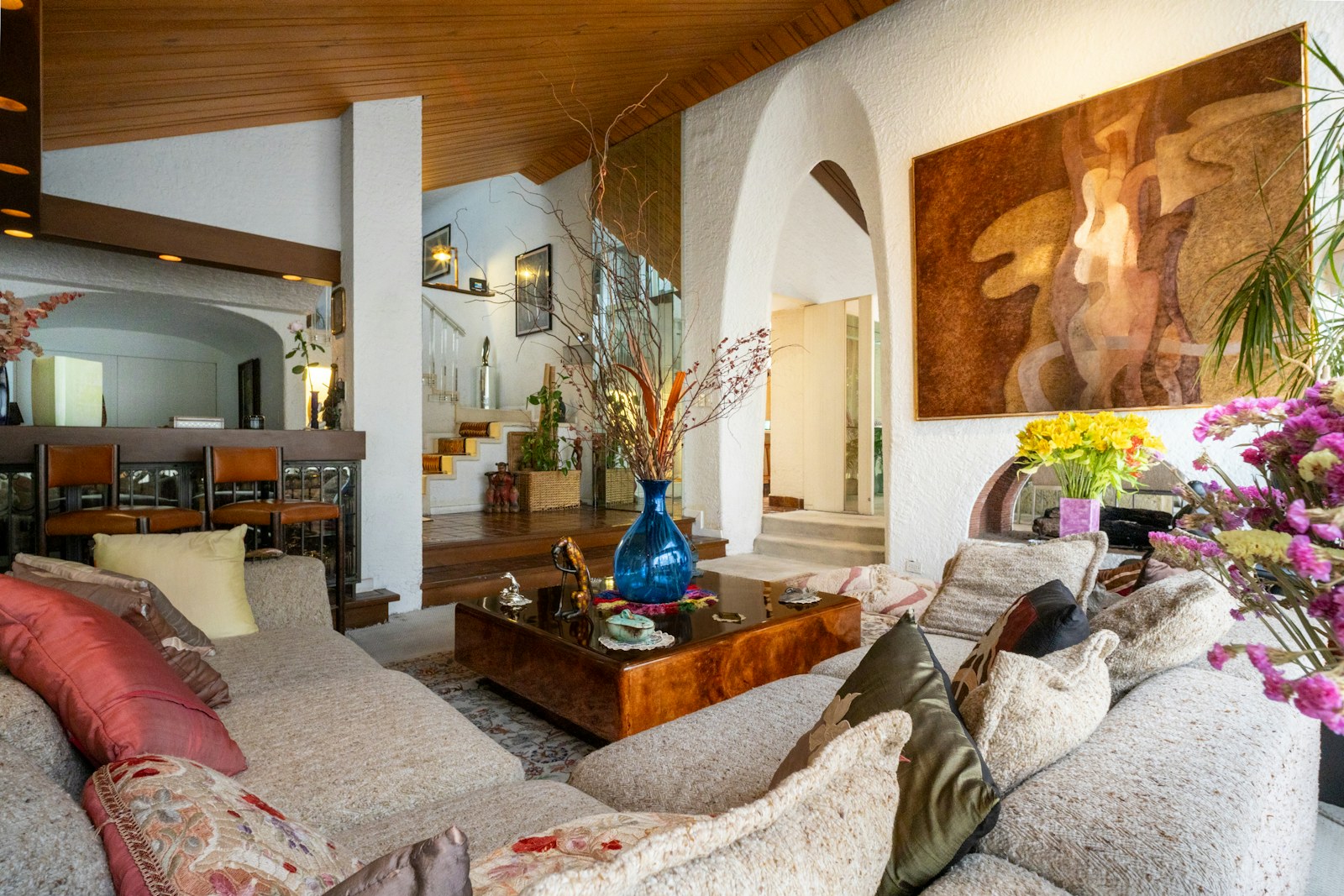
Combine one smooth surface with one tactile one: lime-effect plaster beside linen, honed stone with timber, or a glazed ceramic object on a woven tray. Repeating every texture everywhere can feel themed, so let one or two materials lead and use quieter finishes elsewhere.
For furnishings, consider how a material will be used. Timber brings warmth, but needs the finish and maintenance suited to its location. Woven cane and natural fibres are best placed where they are protected from persistent moisture. Outdoor pieces need weather-appropriate construction; our outdoor furniture materials guide compares exposure considerations.
Add accent colour with a clear ratio
Choose one main accent—olive, terracotta or dusty blue—and repeat it in a few considered places. A second accent can appear in a smaller amount, such as a ceramic vase or a single cushion. Pair warm clay with pale stone and muted green; pair soft blue with sand and natural oak. Avoid selecting paint, rugs and upholstery separately without viewing them together.
Use a simple sample test
Place paint chips beside the floor and a fabric swatch, then view them at different times of day. Check the colours with the room’s lamps switched on as well. If a palette feels too busy, remove the smallest accent before replacing a larger item.
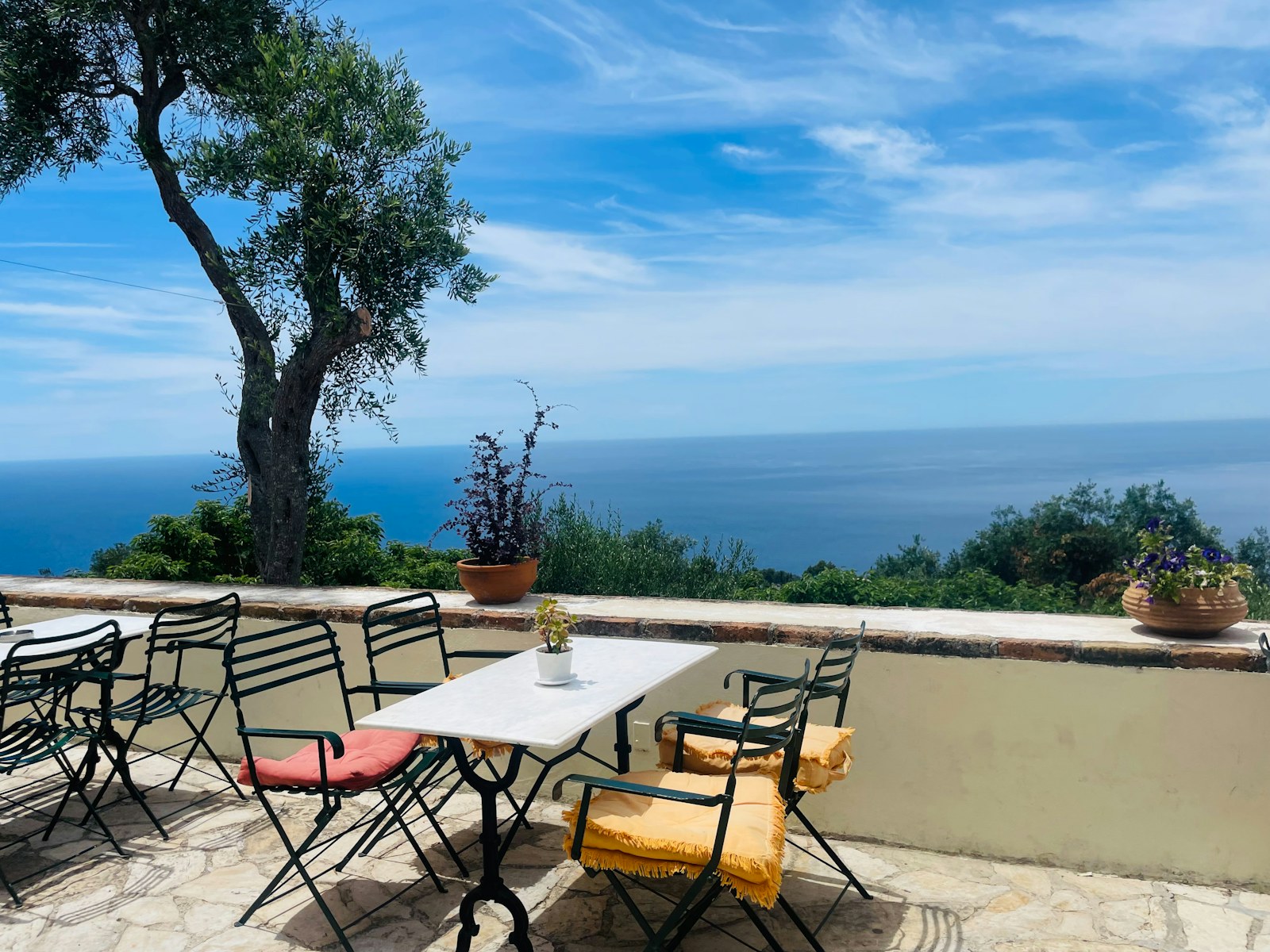
Carry a related tone to an adjoining balcony or patio to create continuity, but choose finishes designed for outdoor exposure. The aim is a home with a few recurring materials and enough variation to feel lived in. For a practical connection between interior and exterior areas, see our guide to light and indoor-outdoor flow.
Leave the samples out for a few days. Look at them with breakfast nearby and again under the evening lamp. Keep the combination you enjoy at both hours, then bring it into the room one useful piece at a time.