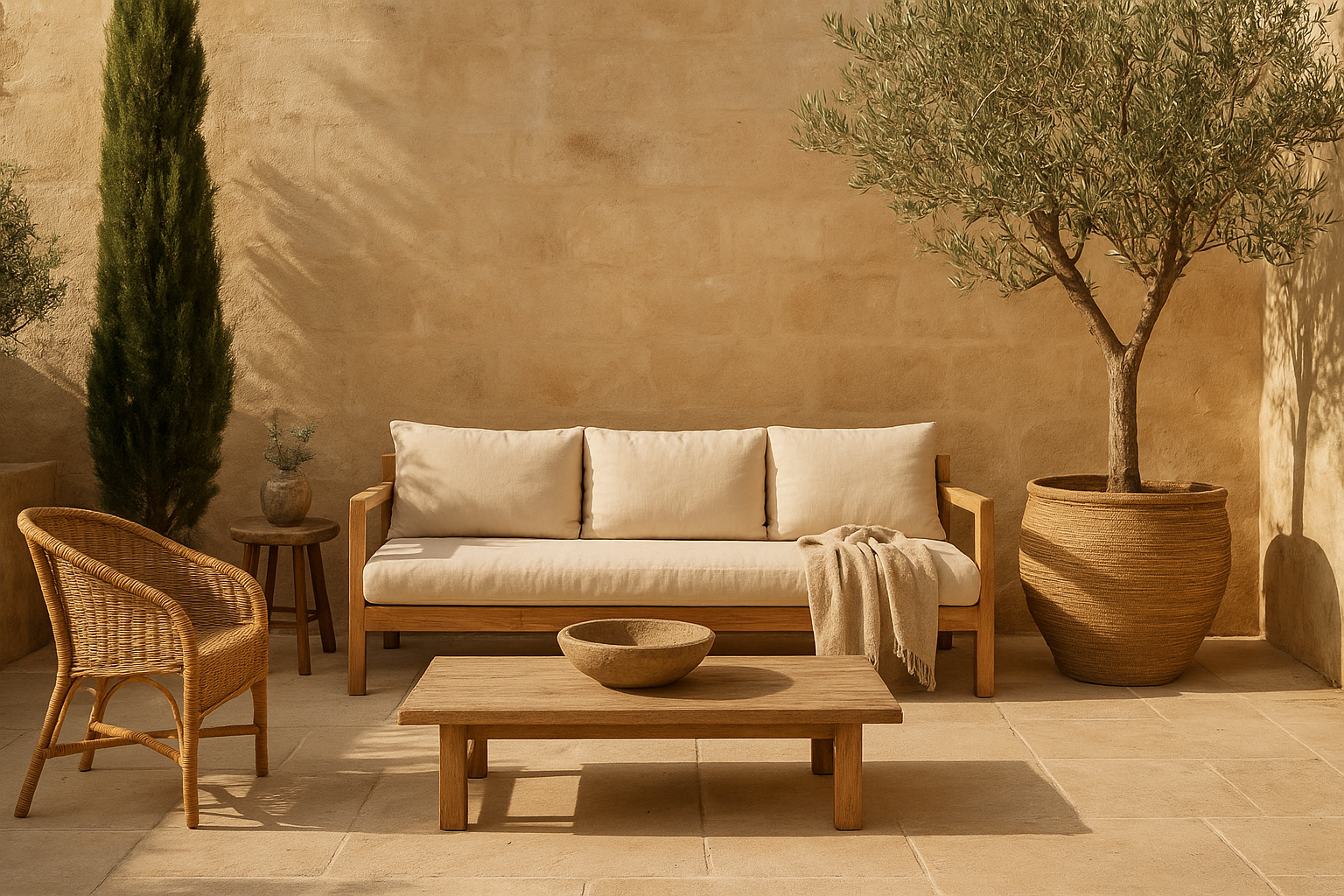
A striped shirt hangs over the chair, a plain cover lies on the sofa and the curtain lifts slightly at the open window. The room already contains a conversation between fabrics. Notice which combinations you enjoy before adding another cushion.
Textiles can bring a Mediterranean-inspired palette into an ordinary home through colour, touch and movement. The useful question is how each piece will feel and behave where you put it.
Start with the fabric you use most
Touch the upholstery, sit against the cushion and try the throw across your knees. A texture that looks inviting may feel rough against bare skin. A bulky weave may leave too little space on a shallow chair.
Read care labels before buying. Consider removable covers where spills are common and check how the fabric, seams and filling should be treated together. Choose the level of upkeep you can reasonably give.
Put the patterns together like an outfit
Choose one detail you want to notice first. A broad stripe can sit beside a smaller check, or a lively floral can have a quieter plain fabric around it. Try the samples together rather than buying each piece in isolation.
A shared colour may connect the patterns without making them match. Step back to the doorway to judge scale, then return to the seat to see how the fabrics feel close up. Change one element at a time.
Let a textile tell a real story
Decorative fabrics have histories worth looking at closely. The V&A describes William Morris’s 1883 Strawberry Thief pattern as inspired by thrushes taking fruit from the garden at Kelmscott Manor. It is an English example of an everyday garden observation becoming an intricate textile.
You can enjoy that relationship between an object and its origin without reproducing a historical room. If a particular weave or motif interests you, learn who made it and what the source can actually establish. Avoid treating every botanical fabric as part of the same tradition.
Check the colour when the room changes
Lay a sample beside the floor, the furniture and any paint you are considering. Look in daylight and again under the lamps you use at night. A cream, clay or olive note may seem quite different from the same colour under shop lighting.
Curtains deserve an actual window test. Consider privacy and light control as well as appearance. Check whether the treatment needs a separate opaque layer after sunset and follow safe installation guidance, particularly around children.
Make each room’s layers practical
In a living room, keep enough comfortable seat space after the cushions are in place. In a bedroom, choose adult bedding for the way you sleep and the care you prefer. In children’s rooms, follow age-appropriate product guidance and use the dedicated bedroom guide alongside current safety information.
At an outdoor seat, use textiles designed for the actual exposure and follow their drying and storage instructions. An indoor fabric that looks right through the open door still needs to stay within its intended use.
Keep the combinations you reach for
Give spare layers a suitable home and leave the favourite ones ready for use. A small change in season may call for a different cover or the return of a familiar throw, rather than a new set of everything.
For the next few evenings, notice the fabric you choose without thinking. Its colour may have caught your eye first; its comfort is what earns another evening in the room. Our colour and material guide can help connect those textiles to the harder surfaces around them.