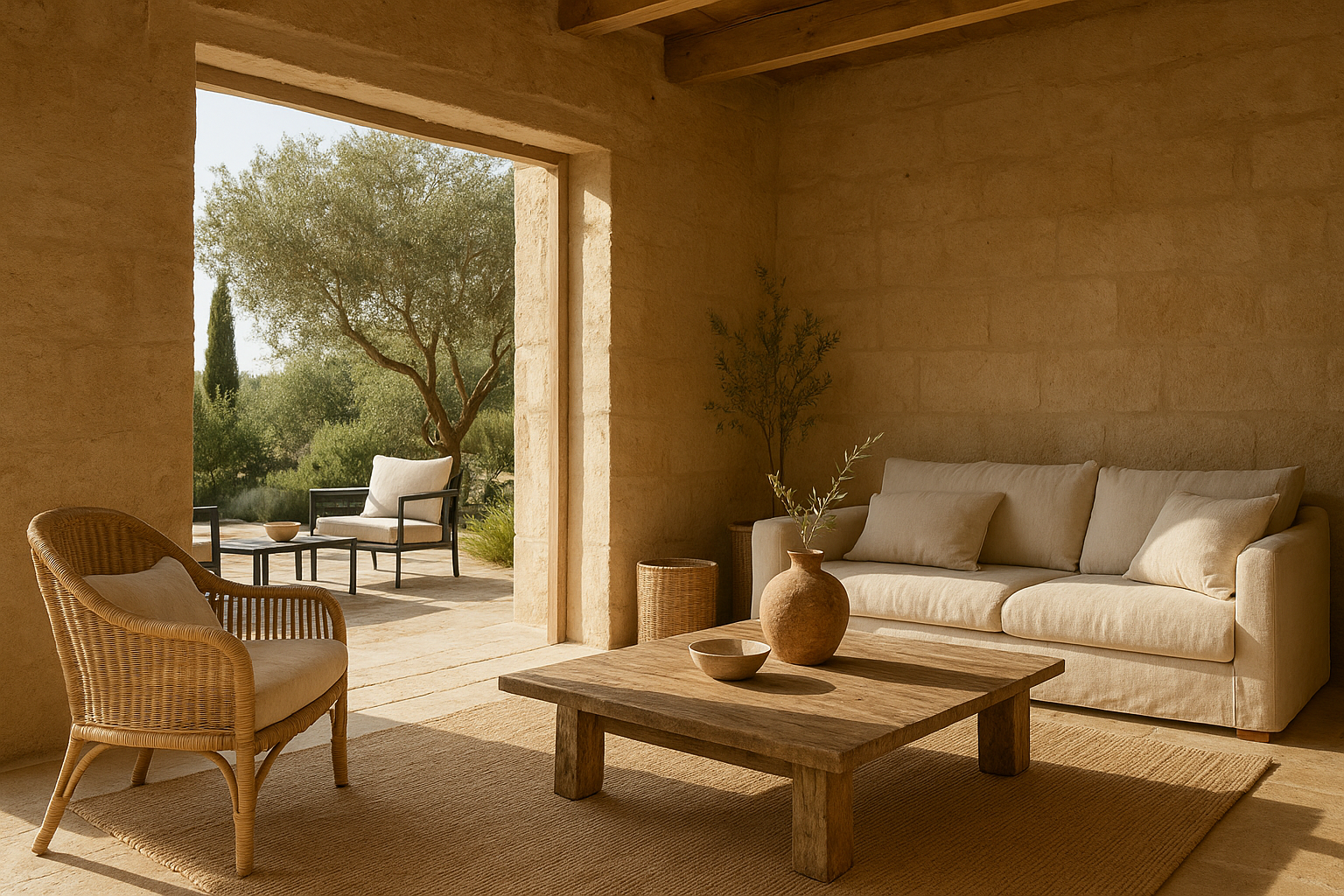
With a tray in both hands, the distance between the sofa and the terrace feels surprisingly revealing. A pot has crept into the doorway, the rug catches underfoot and the best outdoor seat is beyond the patch of shade. Follow that journey before choosing another decorative detail.
Start by observing when the room gets direct sun, where glare falls and which door people use most. Then decide what the adjoining outdoor space is for: breakfast, reading, dining or simply opening the room to air. The broader Mediterranean decorating overview covers the palette; here the emphasis is on light and movement.
Work with the sun through the day
Morning and afternoon light behave differently, so test the space before choosing curtains, an umbrella or a permanent shade structure. Sheer curtains can soften glare while keeping a view; exterior shade can intercept heat before it reaches the glass. Keep window areas clear enough for daylight to enter, and choose finishes that do not throw strong reflections back into the room.
Make the threshold easy to use
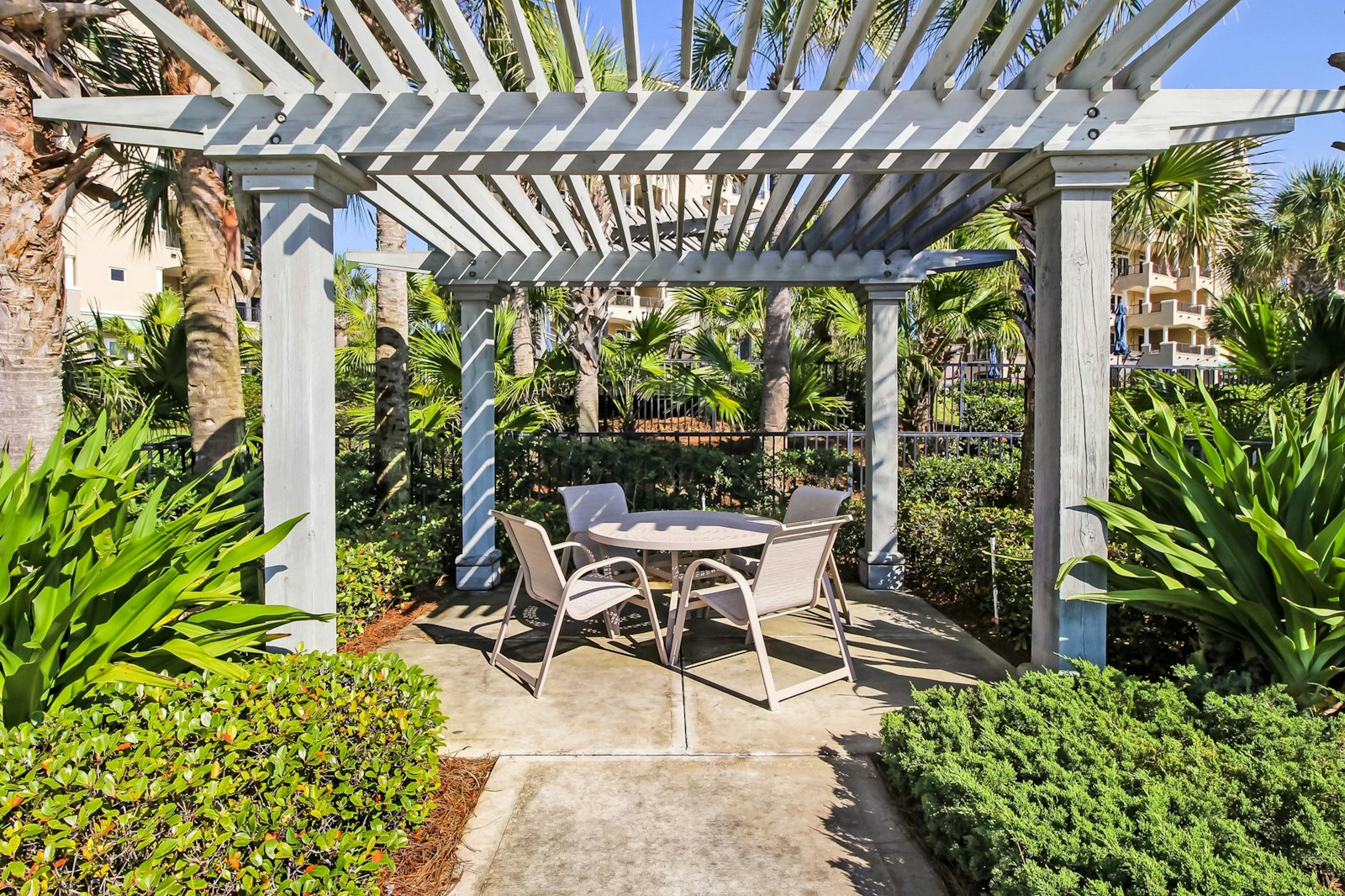
Keep the route between the room and patio or balcony free of low tables, planters and loose rugs. If the floor levels differ, make the change visible and follow local building requirements. A small landing zone for shoes or a tray for outdoor items can prevent clutter from accumulating beside the door.
Choose outdoor furniture by measuring the usable area with the door open and chairs pulled back. A compact dining table may work better than a lounge set when meals are the main activity. For shade in a tight area, see our small-terrace shade guide.
Repeat materials without forcing a match
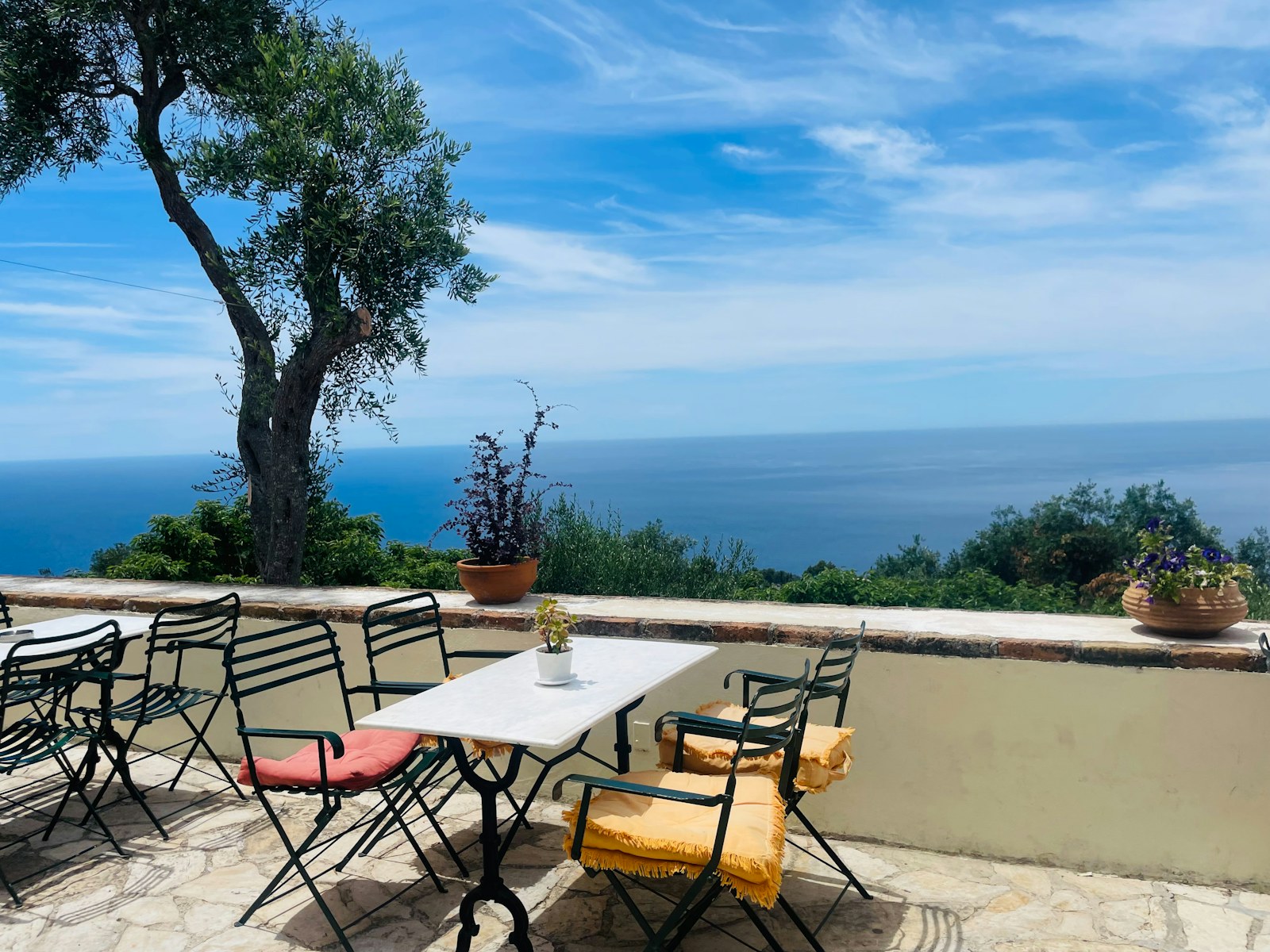
Carry one colour or material across the threshold: a terracotta tone, pale stone, timber or a woven texture. It can appear in different forms indoors and out, which creates continuity while respecting weather and cleaning needs. Keep interior textiles designed for indoor use; select outdoor fabrics and finishes for exposure to sun, moisture and salt where relevant.
Use plants as a visual bridge only where their light and watering needs suit both spaces. A pair of related pots can connect the view, but leave drains, vents and access clear. Avoid placing fragile ceramics where wind or routine movement could knock them over.
Plan for comfort, not a staged reveal
Provide a place to set down a cup, a comfortable seat and shade at the hours the space is actually used. Layer lighting with a modest task light near seating and low-level ambient light where permitted; outdoor electrical fittings must be rated for their location and installed in accordance with local rules by a qualified person.
At the end, walk from the living room into the garden as you would on an ordinary day. If the route is clear and the transition supports a real routine, the connection will feel natural. For a larger property, our villa zoning guide develops the same circulation principles outdoors.
When the room and garden are ready, carry the tray out once more. Put it down, take the seat and enjoy the view back through the open door. The connection is there in the way the day moves.